
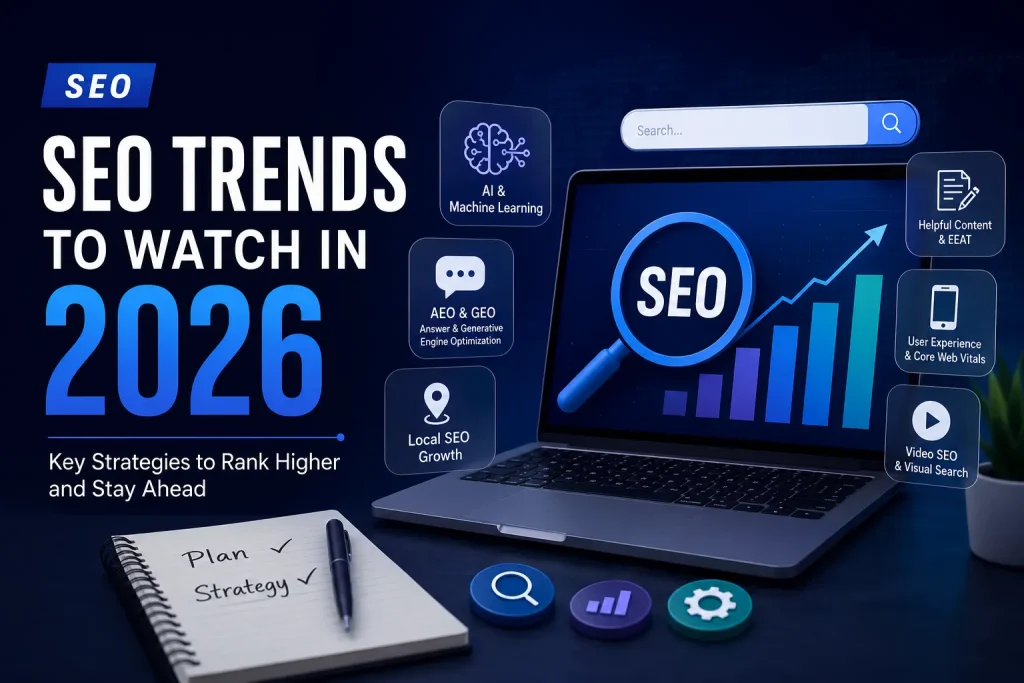
Search engine optimization continues to evolve as search engines become smarter and user behavior changes. In 2026, businesses can no longer depend only on traditional keyword optimization and backlinks. AI-powered search, answer engine optimization (AEO), generative engine optimization (GEO), local SEO, helpful content, and user experience are becoming increasingly important.
For businesses and digital marketers, understanding the latest SEO trends in 2026 is essential for maintaining online visibility, attracting qualified visitors, and staying competitive in search results.
Let’s explore the most important SEO trends businesses should watch in 2026.
1. AI Is Changing the SEO Landscape
Artificial intelligence is one of the biggest changes in digital marketing. Search engines and AI-powered platforms are becoming better at understanding the meaning, context, and intent behind searches.
AI is also changing how marketers create, analyze, and optimize content. From keyword research and content planning to technical audits and performance analysis, AI tools can help marketers work more efficiently.
However, simply generating large amounts of AI content is not a successful SEO strategy. Content still needs to provide accurate, useful, original, and valuable information for the audience.
In 2026, the focus should be on using AI as a marketing assistant rather than replacing human expertise.
2. AEO Is Becoming More Important
Answer Engine Optimization, commonly known as AEO, focuses on creating content that directly answers users’ questions.
Instead of searching for a list of websites, users increasingly expect search engines and AI assistants to provide direct answers.
To improve your AEO strategy:
- Answer common questions clearly.
- Use descriptive headings and subheadings.
- Provide concise explanations.
- Create FAQ sections.
- Use structured content.
- Understand search intent.
- Support claims with reliable information.
Creating content that directly satisfies user questions can help businesses become more visible across modern search experiences.
3. GEO: Optimizing for Generative Search
Generative Engine Optimization (GEO) is another important development in modern SEO.
Generative search systems can summarize information from multiple sources and provide users with an AI-generated response. This means businesses need to think beyond traditional blue-link rankings.
To improve visibility in generative search, focus on:
- High-quality and original content
- Clear factual information
- Strong topical relevance
- Author expertise and credibility
- Well-structured pages
- Relevant supporting sources
- Natural language and conversational answers
SEO is increasingly moving toward optimizing content for both traditional search engines and AI-driven search experiences.
4. Search Intent Matters More Than Keyword Density
Keyword stuffing is no longer an effective way to improve rankings. Search engines are increasingly focused on understanding what users actually want.
For example, someone searching for “best digital marketing services for small businesses” may be looking for recommendations, pricing information, or an explanation of different services.
Successful SEO content should match the searcher’s intent.
Before creating a page, ask:
What does the user actually want to know or do?
Understanding search intent can help you create more relevant content and improve the overall user experience.
5. Helpful and People-First Content Remains Essential
One of the most important SEO trends in 2026 is the continued importance of helpful, people-first content.
Businesses should create content because it genuinely helps their audience—not simply because they want to rank for a keyword.
Good SEO content should:
- Solve a specific problem
- Answer the reader’s questions
- Provide practical information
- Demonstrate knowledge and experience
- Be easy to read
- Avoid unnecessary repetition
- Offer something useful or unique
The goal is simple: create content for people first and optimize it for search engines second.
6. Local SEO Is Critical for Small Businesses
Local SEO continues to be a powerful strategy for businesses that serve a specific location.
Restaurants, agencies, salons, gyms, freelancers, clinics, stores, and service providers can use local SEO to increase visibility among customers searching within their area.
A strong local SEO strategy includes:
- Optimizing your Google Business Profile
- Using relevant local keywords
- Creating location-specific content
- Maintaining consistent business information
- Collecting genuine customer reviews
- Building relevant local citations
- Creating useful local landing pages
For example, a freelancer targeting customers in Alappuzha could create content around relevant searches such as digital marketing services in Alappuzha or SEO services for small businesses in Alappuzha.
7. User Experience and Core Web Vitals Still Matter
SEO isn’t only about keywords and content. Website experience also plays an important role.
A website should be:
- Fast
- Mobile-friendly
- Easy to navigate
- Secure
- Accessible
- Easy to read
Users are unlikely to stay on a website that takes too long to load or is difficult to use on a mobile device.
Improving website performance can therefore benefit both users and your overall SEO strategy.
8. Video SEO Is Growing
Search isn’t limited to traditional web pages. People are also discovering information through platforms such as YouTube, Instagram, and other video-based platforms.
Businesses can benefit from creating useful video content around questions, tutorials, product information, reviews, and educational topics.
Optimize video content by using:
- Relevant titles
- Descriptive captions
- Useful descriptions
- Appropriate keywords
- Clear thumbnails
- Chapters where appropriate
- High-quality and helpful information
Video can also support your broader content strategy by turning one topic into multiple content formats.
9. Topical Authority Is More Valuable Than Random Content
Publishing hundreds of unrelated articles isn’t necessarily an effective SEO strategy.
Instead, businesses should build topical authority by covering important aspects of a specific subject in depth.
For example, a digital marketing website could create a content cluster around SEO:
- What is SEO?
- Keyword research guide
- On-page SEO
- Technical SEO
- Local SEO
- Link building
- SEO tools
- SEO trends
- SEO mistakes
- SEO analytics
This approach helps create a connected content ecosystem that provides more value to visitors.
10. Zero-Click Searches Are Changing SEO
A zero-click search occurs when users get the information they need directly from the search results without visiting a website.
Featured snippets, knowledge panels, maps, AI-generated answers, and other search features can reduce traditional website clicks.
Instead of focusing only on clicks, businesses should also consider visibility, brand awareness, mentions, and overall search presence.
Creating concise answers, structured content, FAQs, and authoritative resources can help businesses compete in these changing search environments.
How to Prepare for SEO in 2026
To stay competitive, businesses should take a broader approach to SEO.
Start by:
- Understanding your target audience.
- Researching search intent before creating content.
- Building topical authority.
- Creating original and helpful content.
- Optimizing websites for mobile users.
- Improving page speed and user experience.
- Investing in local SEO when relevant.
- Exploring AEO and GEO strategies.
- Using AI tools responsibly.
- Tracking SEO performance and continuously improving your strategy.
Final Thoughts
The future of SEO is moving beyond simple keyword rankings. AI search, AEO, GEO, local SEO, helpful content, video, topical authority, and user experience are shaping how businesses compete for online visibility in 2026.
The most successful SEO strategy isn’t about chasing every new trend. It’s about understanding how people search, creating genuinely useful content, building authority, and adapting to changes in search technology.
If businesses start preparing for these SEO trends in 2026, they can build a stronger online presence and stay competitive as search continues to evolve.